Fieldwork at Bournmouth

Bournemouth University, Archaeology & Historic Enviroment Group

Undergraduate programmes include: Foundation Degree in Field Archaeology, BSc Archaeology, BSc Archaeological and Forensic Sciences, BA Archaeology and Prehistory, BA Roman Archaeology, BSc Field Archaeology, BSc Heritage Conservation, BSc Heritage Conservation & Tourism and BSc Marine Archaeology. A wide range of MSc programmes available. Projects include: Billown Neolithic Landscape project, Isle of Man; Allen Valley [...]

The Insitute of Archaeology, UCL

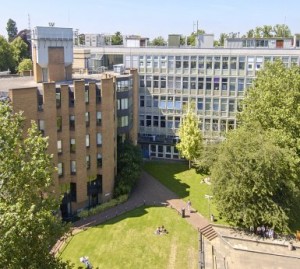
University College London, Institute of Archaeology

UCL is the largest archaeological department in the country and offers an exceptionally wide range of topics covering both archaeological practice and cultural area studies.

Field work at Bradford University

Bradford University, Department of Archaeological Sciences

The Department of Archaeological Sciences has been awarded “excellence” in the recent round of teaching quality assessments, and is rated 5 (out of 5*) for research. It combines these two strengths to offer degrees with a unique blend of archaeology and natural sciences. We offer undergraduate BSc courses in Archaeology, Archaeological Sciences, Forensic and Archaeological [...]

Institute of Archaeology, Oxford

Oxford University, School of Archaeology

Teaches European, Classical and World Archaeology from the Bronze Age to the post-Roman period. Excavation/projects in the UK: Danebury Environs, The Hillforts of the Ridgeway, Artefacts from Eynsham Abbey, Iron Age axe heads, Early Medieval leatherworking in England and the Wessex Hillforts Project. The Hillforts of the Ridgeway project includes a training excavation. The Institute, [...]

How does Distance Learning Work?

How does Distance Learning Work?

Lynn Bright, of College-on-the-Net, explains how distance learning works.

Distance Learning – Anytime, anywhere

Distance Learning – Anytime, anywhere

For many, the words ‘distance learning’ automatically conjure up a world of geeks staring fixedly at computer screens all day. However, for those of us delivering teaching in this way, it is a much broader church than just computers, software and the internet.

Lifelong study

Lifelong study

Richard Lee, Education Project Officer, Council for British Archaeology gives CA the run down on the best choices for Life long learning

The Graduate View

Archaeology has always been a vocation that offered little in the way of job security. Now, in the wake of the recession and subsequent collapse in new builds and with about a fifth of the archaeological workforce having been laid off in the past year, the outlook is more grim than usual. Exactly how should [...]

Specialisms in archaeology – Choosing a field

The field of archaeology covers the full extent of human existence, through time and across the world. Small wonder it has spawned so many sub-disciplines, theoretical and practical. We look at some of the choices.

Is there a future in studying the past?

Is this the time to pursue a course in archaeology? The word from the field that reaches the Current Archaeology offices is that graduates are disillusioned with their prospects: jobs are scarce, competition is fierce and projects are poorly funded. What’s the point?

Research

Research and Academia

There are many areas of the world and periods in the story of the human race to which archaeologists can devote themselves through research and excavation. From Roman coins to Egyptian hieroglyphs, from the Maya pyramids to the megaliths of Stonehenge, there is something to intrigue, obsess and satisfy everyone with imagination, dedication and enthusiasm [...]

Underwater Archaeology

Maritime and Coastal Archaeology

The dramatic emergence of the Mary Rose from the bottom of the sea off Portsmouth in 1982 inspired many an archaeologist to enroll in diving lessons (see CA 218). However, maritime archaeologists also study submerged cultural environments and coastal settlements, as well as ships, ports and harbours, to set them within the relevant socio-political context. [...]

Industrial Manchester

Industrial Archaeology

The archaeology of the industrialised world is gaining popularity. Although its roots can been seen as far back as the 16th century, the Industrial Revolution of the 18th and 19th centuries was a time of great change in this country and around the world. Its architecture, the emergent technology and the physical remains of the [...]

Archaeoatsronomy

Cognitive Archaeology

This specialism looks at ideologies and belief systems of previous civilisationsthrough their religious structures,art and practices and covers a broad spectrum of sub-disciplines. Archaeoastronomy comes under this heading. Since time immemorial humans have looked to the skies. Archaeoastronomy concentrates on how ancient cultures traced the movements of the planets and the subsequent significance of their [...]

Conflict Archaeologist Nick Saunders

Battlefield Archaeology

Initially, this area came under the auspices of general field archaeology, but battlefield experts have rapidly developed it into a specialist subject which, due to its very nature, is often a sensitive one, especially – especially when dealing with World War I and II sites, which still affect people living today. Because battles invariably took [...]

Experimental archaeology

Experimental archaeology

In experimental archaeology, archaeological theories are put to the test in a practical way by recreating lost structures or artefacts using the same techniques as would have been employed for the originals. The Iron Age farm at Butser (CA 188) and the Ferriby Bronze Age boat (CA 191) are two examples.  

Conservation

Conservation in Archaeology

Conservators work on archaeological finds and structures, using a knowledge of the cultural background of the subject matter as well as scientific methods to document, examine, analyse and preserve the material. It is often painstaking but extremely rewarding work, and requires an understanding of the environmental conditions in which the archaeological material has been preserved [...]

Environmental Archaeology

Environmental archaeology

Environmental archaeology is the study of the long-term relationship between humans and their environments. It has emerged as a formal sub-discipline within the last 30 years, and become firmly established as an essential component to most excavation projects. The subject is, itself, broken down into further specialisms, including: • Archaeobotany (also known as paleoethnobotany) is [...]

Osteoarchaeology

Forensic archaeology and Osteoarchaeology

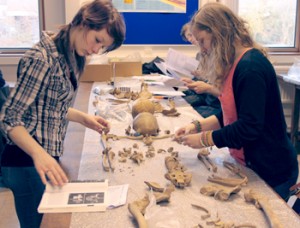
A relative newcomer to the world of archaeology, forensic techniques have been responsible for startling revelations – such as that Napoleon Bonaparte suffered arsenic poisoning, with significant traces of the toxin found in his hair – and is increasingly being employed to solve modern criminal investigations. • Osteoarchaeology is the detailed study of human bones, [...]

Archaeological Science

Archaeological Science

Scientific investigative techniques are constantly changing, improving and significantly enhancing our archaeological knowledge. Archaeological science, also known as Archaeometry, comprises many furthe rsub-divisions which often overlap. Broadly, it involves the dating and the detailed scientific analysis of artefacts. Dating techniques include: Thermoluminescence (for inorganic material), Radiocarbon dating (for organic material), the use of Bayesian statistics [...]

jhjh