Caistor Survey Reveals Iron Age Origins

Caistor Survey Reveals Iron Age Origins

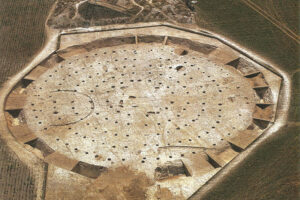
A recent geophysical survey has revealed the plan of the Roman town at Caistor St Edmund in astonishing detail, including circular features that apparently predate the Roman town and others that could indicate Saxon settlement.

Bath Coin Hoard

Archaeologists working for Cotswold Archaeology have uncovered a rare mid 3rd century Roman coin hoard in Bath. Based on the size of the deposit, this hoard could contain over 1,000 coins and was lifted as a single soil block from the site, where the main pool will be built for the Gainsborough Hotel and Thermal Spa, to be taken away [...]

Rare Roman Shoes

Rare Roman Shoes

When Wessex archaeologists lifted the lid of a three-tonne stone coffin from Boscombe Down, Wiltshire, last year, they were greeted by the tender sight of a woman cradling a young child in her arms. The sealed environment within the coffin had slowed down the process of decay sufficiently to preserve the remains of the mother [...]

A Truly 'Revolutionary' Neolithic After All?

Most students of prehistory will have wrestled at some stage with the essay question that runs: ‘The Neolithic Revolution was neither Neolithic nor revolutionary: discuss’ – the point being that the lifestyles that characterise the Neolithic do not appear suddenly, but take millennia to develop: wild seed harvesting continues alongside cultivation; hunting alongside animal  domestication; and [...]

Return to Ringlemere

Return to Ringlemere

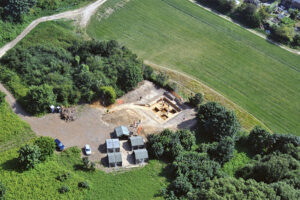
Members of Canterbury Archaeological Trust returned to Ringlemere Farm in the summer of 2007, and although nothing was found  to compare with the famous Ringlemere Gold Cup (see CA 208) found in 2001 by metal detectorist Cliff Bradshaw, now on display in British Museum, considerable further detail was added to the landscape context for that [...]

Boatyard Beneath The Solent's Waves

Boatyard Beneath The Solent's Waves

Divers from the Hampshire and Wight Trust for Maritime Archaeology (HWTMA), investigating a drowned Mesolithic site at the foot of Bouldnor Cliff, in the western Solent, have found evidence for log-boat construction dating from around 6000 BC. The site was discovered when flint cores, flakes and bladelets were spotted in the upcast from a lobster [...]

The Best Of The Year's Metal Detector Finds

The Best Of The Year's Metal Detector Finds

A beautiful Iron Age comb unearthed in Tanworth-in-Arden, Warwickshire,by metal-detector enthusiast Russell Peach, is one of the most notable of nearly 60,000 archaeological finds reported to the Portable Antiquities Scheme by members of the public during 2006. The copper-alloy comb dates from between AD 25 and 75, and is decorated with an ‘armadillo’ motif, and [...]

Anglo-Saxon Royal Burial on Teeside

Anglo-Saxon Royal Burial on Teeside

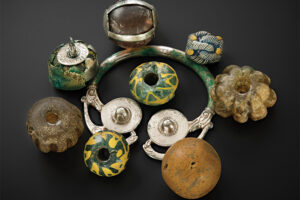
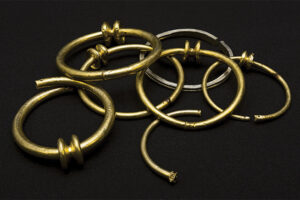
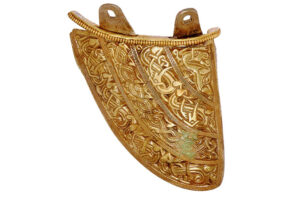
The discovery of spectacular gold jewellery in a mid-7th century cemetery on land near Redcar,Teesside, is being hailed as ‘the most dramatic find of Anglo-Saxon material for generations’ by Tees Archaeology Officer Robin Daniels. The quality of the jewellery, along with associated weapons and clothing, suggests that this is a royal burial site. If so, [...]

The archaeology of modern poverty

The archaeology of modern poverty

In 1901 Seebohm Rowntree – a York chocolate manufacturer – published one of the classic texts of early sociology. His work inspired decades of social reform to eradicate poverty and construct a welfare state. Now, archaeologists in York are excavating the remains of the very urban slums that were the subject of Rowntree’s study.

Silbury Hill: A last look inside

Silbury Hill: A last look inside

On May 29, 2000, Amanda Chadburn, the English Heritage Inspector of Ancient Monuments for the South-Western Region, received an alarming phone call: Silbury Hill had collapsed…

Chiseldon Cauldrons

Chiseldon Cauldrons

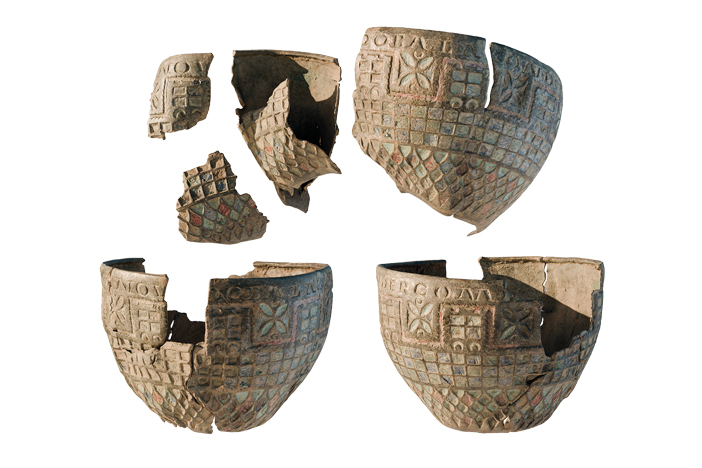
In the story of Bricriu’s feast and of MacDatho’s pig in the Irish epics, heroes vie with each other for the champion’s portion – the first cut of meat to be speared in the communal cauldron. What were these cauldrons like? A hoard of twelve – gobsmackingly unique’ in the words of one British Museum [...]

London

London

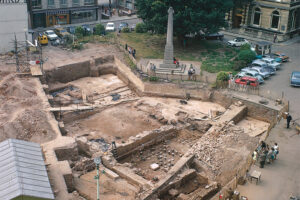
Museum of London archaeologists have unearthed both the latest Roman and the earliest Anglo-Saxon evidence so far found in the capital. Roman Londinium was largely abandoned by c. AD 400 and it was not until c. AD 650 that Anglo-Saxon Lundenwic established. What happened in between? New rescue excavations at St Martin-in-the-Fields church in Trafalgar [...]

Power Houses

Power Houses

‘A house is a living organism. It expresses the needs, habits, energy, taste and imagination of its builder and his descendants. To interpret the building, understand the builder. And look at its immediate context to help bring the property to life.’ This is the approach of Anthony Emery, our leading expert on the great houses [...]

KING TUT COMES TO LONDON!

      The treasures of King Tutankhamun's tomb have gone on display in a blockbuster exhibition at the 02 Centre. Opinions are divided about the exhibition: http://arts.guardian.co.uk/art/heritage/story/0,,2211279,00.html

Welsh skeleton re-dated: even older!

Welsh skeleton re-dated: even older!

The Red Lady of Paviland, discovered in a cave on Gower (Wales) in the 1820s may be 4,000 years older than previously thought.

Has Stonehenge's huge support settlement been found?

Archaeologists working near Stonehenge have uncovered what they believe is the largest Neolithic settlement ever discovered in Northern Europe.   The settlement is buried beneath the bank of Durrington Walls, a great circular ditched enclosure, and archaeologists beleive that Durrington Walls holds clues to the Stonehenge mystery. For the full story:  http://news.bbc.co.uk/1/hi/sci/tech/7078578.stm

The Harrogate Hoard

The Harrogate Hoard

A reminder of our Viking past was recently discovered lurking beneath a Yorkshire field; what is now being called the ‘Harrogate Hoard’ is an archaeological find of global significance. Said by experts to be the most important Viking find in Britain in 150 years, the finders, metal detectorists David and Andrew Whelan, called the discovery [...]

Iron-masters of the Caledonians

Iron-masters of the Caledonians

The Roman writer Tacitus says that 30,000 Caledonians massed to stop the Roman invasion under Agricola in AD 84. The bloody battle of Mons Graupius may have been fought near Inverness. Now a major site of the period has been uncovered in the area – complete with two huge residences, a cluster of smaller houses, [...]

Message in the Stones

Message in the Stones

Why transport 82 two-tonne megaliths across more than 250 miles of mountain, river and sea to build a stone circle at Stonehenge? This is one of the greatest mysteries of Britain’s best-known, but least understood, prehistoric monument. Now Tim Darvill thinks he has the answer: the famous bluestones had healing powers, and the builders of Stonehenge [...]

Rare Ice Age rock art found in Cheddar Gorge

Rare Ice Age rock art found in Cheddar Gorge

A very rare mammoth carving has been discovered on a wall in Cheddar Caves (Somerset, England). The 13,000 yearold  carving is being hailed as one of the most significant examples of prehistoric art ever found in Britain.

jhjh