Royal Hospital Greenwich

Royal Hospital Greenwich

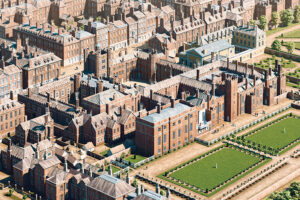
Royal Hospital Greenwich was the naval equivalent of the more famous Chelsea Hospital for army veterans. It was a retirement home for ‘seamen worn out or become decrepit by age and infirmities in the service of their country’. Among them were at least 93 men who fought at Trafalgar.

Pottery and Plunder

Pottery and Plunder

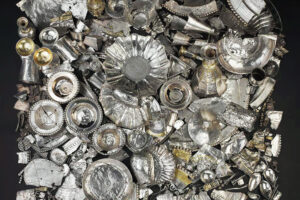
When large amounts of rare pottery, Venetian tea bowls, Cuban silver coins and pottery from the Caribbean began to turn up in 16th and 17th century cesspits in London’s Narrow Street, archaeologists were more than a little perplexed.

Tintagel Castle

Tintagel Castle

Medieval historian Geoffrey of Monmouth claimed Arthur was conceived at Tintagel, a myth that has helped make it one of the most visited archaeological sites in Britain. What do we really know about this iconic site? A major excavation project, begun in the 1990s, has just published its conclusions.

Suffolk Gold

Suffolk Gold

A stunning hoard of Iron Age gold coins was found in Suffolk in spring 2008, and has turned out to be one of the largest and most spectacular finds of its kind in Britain. Unusually, for a find of this size, almost all the coins were found actually in situ at the base of the [...]

CA Awards

CA Awards

We’ve gone through the last 12 months of CA and picked out some of the sites, projects, books and personalities that have made an impression and generated feedback. The next step is up to you: we need your votes to determine who will be the recipients of the inaugural Current Archaeology Awards. Click here to [...]

Archaeology Festival 2009

Archaeology Festival 2009

Current Archaeology, Cardiff University and the National Museum Cardiff are pleased to announce the 2nd annual Archaeology Festival, 6-8 February 2009

Viking house found at Hungate

Viking house found at Hungate

Archaeologists in York have uncovered a Viking house at Hungate earlier this month. The building dates from the mid to late 10th century and is of the same type as those found at Coppergate during excavations in the late 1970s and early 1980s – now part of the famous JORVIK Viking Centre.

Is this Britain's oldest toy?

Is this Britain's oldest toy?

A lump of chalk carved to resemble a piglet with snout and floppy ears has been found in the grave of a prehistoric child buried near Stonehenge.

Shakespeare's first theatre

Shakespeare's first theatre

Shakespeare is associated mainly with the Globe and the South Bank. But most of his early plays were first performed at a playhouse in Shoreditch called simply ‘The Theatre’. Museum of London archaeologists think they have just found it.

Harnessing the tides: Excavating the earliest mills in Ireland

Harnessing the tides: Excavating the earliest mills in Ireland

A tiny fragment of granite and a sherd of pottery, unearthed at the tail end of an excavation in Northern Ireland, signalled the discovery of the world’s oldest excavated tide mill. Chris Catling reports back from Nendrum.

Celtic Art and Tourist Knick Knacks

Celtic Art and Tourist Knick Knacks

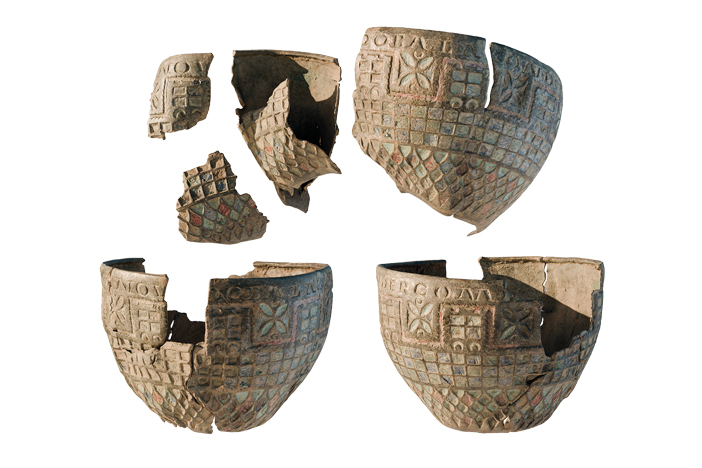
Enamelled bronzes from Roman Britain have turned up all over the Roman world.  This poses an interesting question: were Celtic artists making tourist knick knacks for Roman soldiers to take back home? Leading expert Ernst Künzl puts a British ‘souvenir’ into context.

Chiswick House

Chiswick House

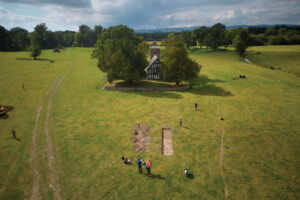
English Heritage archaeologists have recently had a rare chance to investigate Britain’s first ‘Palladian’ country house – Chiswick House in West London.

Roundhouses

Roundhouses

 In 1970, writing in CA 21, architect-turned archaeologist Chris Musson estimated that there were perhaps 200 roundhouses known in archaeological literature. The result of recent work is that now, 30 years after Musson’s estimate, we can suggest that the number of excavated roundhouses in Britain must be rapidly approaching 4,000 – a staggering 20-fold increase [...]

Lost and Found: Conesby Moat

The moated site at North, or Little, Conesby was seen as being one of Scunthorpe’s ‘most charming beauty spots’.  It was probably built by the d’Arcy family who owned the manor for over 300 years after acquiring it in the aftermath of the Norman Conquest.

Cod Bones and Commerce

Historical sources show that the expansion of cod fishing from the 15th century onward played in important role in European colonisation of the North-West Atlantic. It is also known that fishing was important earlier in the medieval period, but the records usually go back no further than the 12th century at the earliest. By then, [...]

Roman Britain's Great Plague?

{mosimage}When archaeologists began work at 120-122 London Road, Gloucester, in August 2004, it was the site of a disused service station.  Oxford Archaeology had been called in to excavate what was known to be part of the Wotton cemetery, one of several on the roads leading out of Roman Gloucester. .

Gwithian: Dark Age secrets from the dunes

Gwithian: Dark Age secrets from the dunes

Interviewed by The Cornishman in 1954 shortly after setting up his excavation at Gwithian, Charles Thomas, a young graduate of the Institute of Archaeology in London, explained his ambition: ‘A dig such as this, systematically developed through the years, is going to provide a background to Cornish history such as has never been worked through [...]

The Silent Shores Speak

The Silent Shores Speak

North Argyll is a landscape dominated by the sea and, until the recent past, its inhabitants viewed it from a predominantly maritime perspective. Dr Colin Martin shares 30 years of research into this coastal environment.

Britannia: a failed state?

Britannia: a failed state?

Can modern conflicts in the Balkans and the Middle East throw light on how Roman Britain ended? Stuart Laycock, an expert on Late Roman belt-fittings and author of a new book on the period, thinks they can.

Stonehenge Revealed

Stonehenge Revealed

After a gap of some 44 years, Stonehenge is once again being excavated. These excavations were not taking place at the centre of Stonehenge, but in what is called the 'Outer Corridor', located on the right hand side of the panorama below. Andrew Selkirk reports from the site.

jhjh