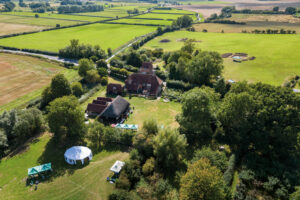
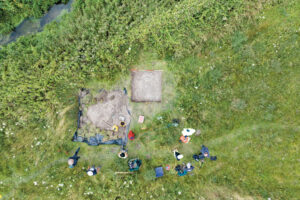
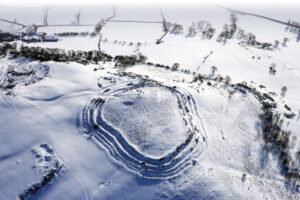
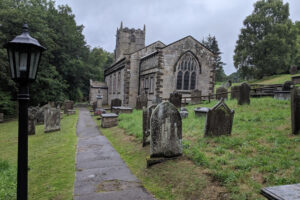
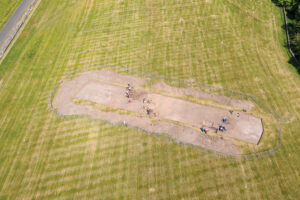
A 9th century palace, an enormous 3,000-year-old Neolithic earthworks and the origins of Scottish kingship: Gordon Noble and colleagues from the University of Glasgow investigate.Few visitors notice the plaque in the village of Forteviot, Perthshire, Scotland, that records the death of Kenneth Mac Alpin, a 9th century king of Scotland. It refers to a passage [...]
Buried face down: Prone Burials
Archaeologists have excavated over 600 bodies from around the world, mysteriously buried face-down. Britain is the biggest hotspot – with more than 200 prone burials. What do they signify? Caroline Arcini of Sweden’s National Heritage Board has been investigating.
Land Between the Oceans Part III: The Making of Modern Europe
Geography made a unitary empire embracing the Mediterranean and temperate Europe inherently unstable; but the wreckage of the Roman Empire contained the building blocks of modern Europe. In the third and final part of our series based on Cunliffe’s new book, Europe between the Oceans, we chart the changes from Caesar to Charlemagne.
The Story of Burford: How to do local history
‘England’s Past for Everyone’ is a groundbreaking new project set up by one of our most venerable institutions, the Victoria County History. Chris Catling argues that their recently published Burford project is a model of how to do a town history.
The Story of Burford: How to do local history
‘England’s Past for Everyone’ is a groundbreaking new project set up by one of our most venerable institutions, the Victoria County History. Chris Catling argues that their recently published Burford project is a model of how to do a town history. Archaeology and local history are very close companions, and the nearer we come to [...]
Roman Villas in Britain: Farms, temples, or tax-depots?
We think of villas as the grand farmhouses of the Roman countryside. But were they? Bryn Walters takes a fresh look at the evidence and comes to some radical conclusions. In the mid 20th century, Sir Ian Richmond, following on R G Collingwood, argued that for too long there had been a bland acceptance that [...]
Roman Wrawby: a site that can’t decide its status
When is a Roman villa not a villa? The term villa covers many different structures, ranging from a palatial country house down to a jumped-up small farmstead. At Wrawby, we have discovered what appears to be a villa at the lower end of the range – a farmstead with pretensions.
Roman Villas in Britain: Farms, temples, or tax-depots?
We think of villas as the grand farmhouses of the Roman countryside. But were they? Bryn Walters takes a fresh look at the evidence and comes to some radical conclusions.
The Land between the Oceans: Part 2. Ships, metals and warriors
In the second part of our mini-series based on Barry Cunliffe’s new book Europe between the Oceans, our focus is the period c.2800-140 BC. We see the rise and fall of great civilisations, and a looming clash between a Mediterranean-based superpower and the Celtic peoples of Iron Age Europe. Once again, it is the movement [...]
Bloody Stone Age: war in the Neolithic
The perception that much of prehistory was relatively peaceful is changing. New research has identified evidence of violent assault in the Neolithic. What does this tell us about Stone Age life as a whole? Forensic archaeologist Martin Smith explains.Whilst many Neolithic burials have been excavated during the last 150 years, they have received only limited [...]
Rewriting the Age of Arthur: the Dark Ages brought to light
Did 9th century Anglo-Saxon propaganda distort the records for the turbulent 5th and 6th centuries? Rather than Briton versus Anglo-Saxon – as in the myth of Arthur – was it simply a murderous struggle between rival British warlords? Archaeologist Miles Russell has been re-reading Dark Age history books.
The Land between the Oceans: Part 1: Europe's ‘Neolithic Revolution’ revisited
Barry Cunliffe’s latest book represents the synthesis of half a century studying the archaeology of Europe, an achievement comparable with that of Gordon Childe in the 1930s. In this article, and in two more to follow in succeeding issues, Current Archaeology summarises his conclusions.
The Mildenhall Treasure: a secret history
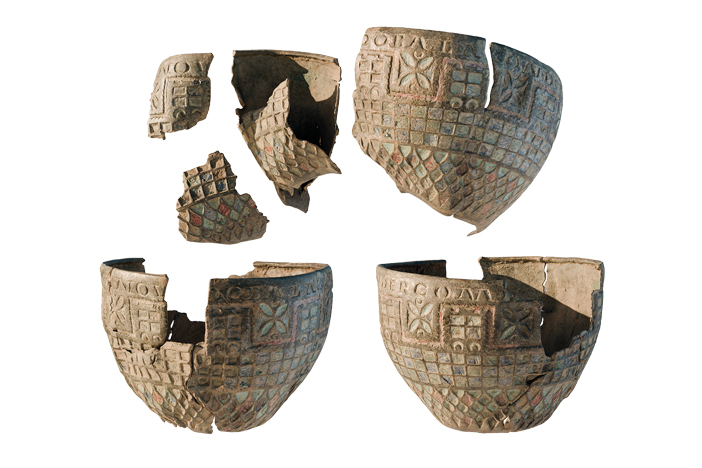
The British Museum’s Richard Hobbs has been playing detective – investigating the 60-year-old mystery surrounding the spectacular Mildenhall Treasure and here he reports on the outcome of his enquiries. One of the most celebrated hoards ever recovered from British soil, the Mildenhall Treasure consists of 34 pieces of exquisitely decorated Roman silver tableware of the [...]
Excavating the slums of Belfast
A neglected and deprived part of Belfast has been excavated by archaeologists to reveal its transformation from 17th century farmland to squalid, overcrowded 19th century urban slums.In 1853, the Rev. W M O’Hanlon, Congregationalist minister for Upper Donegall Street Church, published a series of letters in the Northern Whig, a Belfast newspaper, detailing the filth [...]
Hadrian's Wall: 30 years on
Thirty years ago, David Breeze and Brian Dobson wrote a history of Hadrian’s Wall from the archaeological evidence. Still in print in a revised edition, it is one of the most successful archaeology books ever written. With a major British Museum exhibition devoted to Hadrian opening this July, we asked David Breeze to take a [...]
The Lingering Death of Roman Britain
In the centuries while Eastern England succumbed to Germanic takeover, Britannia Prima still flew the flag for Rome. Only in 1278, when Edward I captured Caernarfon, did this last outpost of the Western Roman Empire fall to a ‘barbarian’ king. Roger White of the Ironbridge Institute, University of Birmingham, describes how Romanitas endured on the [...]
Rebuilding a Roman fort
‘Look after the soldiers’ was Roman emperor Severus’ advice to his successors. Officers were especially favoured, with centurions in the ancient equivalent of modern semis, and regimental COs in veritable mansions. With a new full-size reconstruction now open at South Shields, Nick Hodgson, Principal Keeper at Tyne and Wear Museums, describes a major project to [...]
Vindolanda: Clock or calendar?
It was not easy for the Romans to keep a close track on time. They did not work by minutes, let alone seconds, their smallest unit being the hour. Even that was not standardised, but varied according to season and location. By day, a Roman hour was a 12th of the time between sunrise and [...]
Brough of Deerness
The Brough of Deerness is a sea stack in east Mainland, Orkney, Scotland. Its grass-covered top, surrounded by 30m cliffs, holds the remains of an enigmatic Viking Age settlement interpreted as a chiefly stronghold or monastery. The co-occurrence of a Viking Age church and approximately 30 associated buildings in such an exposed location make it [...]
Shooters Hill : Digging up Dad's Army
Conflict archaeology – the archaeology of communities preparing for, or involved in, military or civil strife – is a relatively new discipline, asking questions about the physical and cultural landscapes of wartime Britain. In this light, the order quoted above becomes a check-list for the landscape of defence created by the British Government between 1936 [...]